

The Cedar of the Immaculate: The Dogma Lived in the Maronite Tradition

Maronite spirituality and the Immaculate Conception
The Cedar of the Immaculate: The Dogma Lived in the Maronite Tradition

For the Maronite Church, the cedar of Lebanon is more than a national symbol. It is a Marian title. In the ancient Syriac tradition, the Virgin is praised as the one who is all fair, the holy and incorruptible wood chosen by God.
Long before the dogma of the Immaculate Conception was defined in 1854, Maronite and Syriac poetry had already sung of Mary as pure, radiant and preserved by grace. The liturgy speaks of her as:
ܡܪܝܡ ܟܠܗ ܫܦܝܪܬܐ Transliteration: Maryam kulah shapirtha
English: "Mary, all beautiful."
She is the cedar whom the winds of corruption never touched. Through the lives of four saints and blesseds of Lebanon—Saint Nimatullah Al Hardini, Saint Charbel Makhlouf, Saint Rafqa and Blessed Stephen Nehmé—the Immaculate Conception appears not as a distant privilege of Mary, but as a living force shaping monastic holiness.
Saint Nimatullah Al Hardini: Teacher Formed By The Dogma
Kfifane, mid-nineteenth century
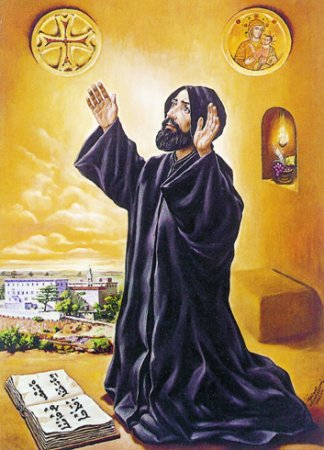
Saint Nimatullah Kassab Al Hardini (1808–1858), monk of the Lebanese Maronite Order and professor at the monastery of Kfifane, lived precisely at the time when the dogma of the Immaculate Conception was proclaimed. Immersed in the Maronite Divine Office, he prayed day and night with texts that praise Mary as pure, holy and full of grace.
When news of the dogma reached Lebanon, Hardini received it with eager faith. Contemporary testimonies and Vatican biographies record that he loved the mystery of the Immaculate Conception and that he often added, after the Angelus, the simple invocation: "Blessed be the Immaculate Conception of the Blessed Virgin."
This small phrase says much. Hardini was living in a Lebanon marked by unrest and conflict. By blessing the Immaculate Conception, he placed Mary's spotless purity as a counter-sign in a wounded land.
Hardini also taught a spirituality of the hidden life. He insisted that the monk who perseveres humbly in community, day after day, pleases God more than the one who seeks extraordinary exploits in solitude.
Syriac Tradition
ܐܬܕܟܝܬ ܡܢ ܒܛܢܗ ܕܐܡܗ ܘܐܬܩܕܫܬ ܡܢ ܪܝܫ
Ethdakyat men batneh d'emmeh w'ethqaddasat men reesh
"She was purified in her mother's womb and sanctified from the beginning."
Saint Charbel Makhlouf: The Hermit In The Light Of Mary
From Kfifane to Annaya

Among Hardini's students was a young monk named Youssef Makhlouf, the future Saint Charbel (1828–1898). He received his formation at Kfifane under Hardini's guidance and carried his teacher's Marian devotion into the silence of the hermitage at Annaya.
Charbel left very few written words, but the memory of his contemporaries shows how deeply he lived under the protection of Mary. In the traditional Maronite reading of Genesis 3:15, the Virgin stands in unbreakable enmity with the serpent. Charbel embodied this conviction in his own spiritual combat.
Charbel spent long hours in adoration before the Eucharist, letting this light purify his own mind and heart. In this sense, the dogma of the Immaculate Conception was for him not only a doctrine, but a living light. Mary, all holy from the first moment, reflected the holiness of her Son in the silence of his hermitage.
Prayer
يا أم النور، إحفظينا بنور إبنك
Ya Oumm al Nour, ihfazina bi nour ibnak
"O Mother of Light, keep us in the light of your Son."
Saint Rafqa: The Witness Of Pure Suffering
From the Mariamettes to the Lebanese Maronite Order
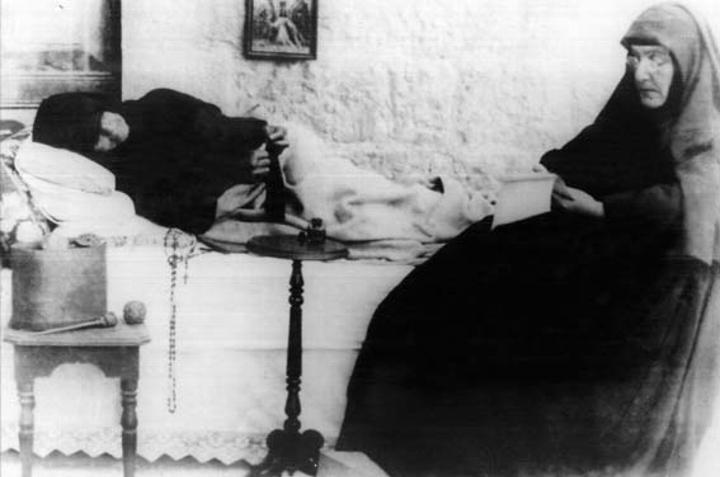
Saint Rafqa Pietra Choboq Ar-Rayès (1832–1914) reveals another face of the Immaculate Conception: its connection with redemptive suffering. Before entering the Lebanese Maronite Order, she belonged for many years to the congregation commonly called the Mariamettes. From the beginning of her religious life, her vocation unfolded under the sign of this mystery.
Later, as a cloistered nun, Rafqa asked to share more closely in the Passion of Christ. Her prayer was heard in a radical way. She gradually lost her sight, experienced intense pain in her head and became almost entirely paralyzed. Yet the sisters who lived with her speak of her serenity, her smile and the light on her face when she spoke of Jesus and Mary.
The Immaculate Mother is also the Sorrowful Mother. Mary's absence of sin did not spare her from suffering; it deepened it, because her heart loved with a perfect love. Rafqa followed this path. Her physical darkness became a place where the inner light of grace could shine more clearly.
Prayer
يا مريم البريئة من كل خطيئة، علّمينا أن نحب الصليب بقلب نقي
Ya Maryam al-barīʾa min kull khatīʾa, allimīna an nuhibba as-salīb bi qalb naqī
"O Mary, free from every sin, teach us to love the Cross with a pure heart."
Blessed Stephen Nehmé: The Purity Of "God Sees Me"
Kfifane again: the field and the workshop

Blessed Stephen (Estephan) Nehmé (1889–1938), born Youssef Nehmé, entered the monastery of Kfifane where Saint Nimatullah had lived. In this same community soil that had formed Hardini and Charbel, Stephen learned simplicity of heart, love of work and deep devotion to the Mother of God.
His entire spiritual life can be summarized in his short motto: "God sees me." The Immaculate Conception is, in a sense, the fruit of this divine gaze. Stephen allowed that same gaze to shape his daily choices. He guarded his eyes and his words to remain transparent before God.
Stephen worked with his hands in the fields and construction sites. Those who labored beside him recall that he prayed the Rosary almost without interruption. Under the Lebanese sun, among olive trees and stones, he repeated again and again "Hail Mary, full of grace." For him, this was a way of drawing breath from the mystery of the Immaculate Conception in the very ordinariness of work.
Prayer
يا مريم الطاهرة، يا أمّنا، إجعلينا نعيش تحت نظر الله كما عاش خادمك إستفان
Ya Maryam at-tāhira, ya Ummana, ijʿalīna naʿīsh tahta nazar Allāh kamā ʿāsha khādimuka Istifān
"O pure Mary, our Mother, help us to live under the gaze of God as your servant Stephen did."
Conclusion: Under The Shade Of The Cedar
From the quiet cell of Hardini at Kfifane to the stone hermitage of Charbel in Annaya, from the sick bed of Rafqa to the vineyards and workshops of Stephen, the same light appears. The Immaculate Conception is not presented as a distant, abstract privilege, but as a living mystery that shapes concrete lives.
For us today, their witness is an invitation. The Immaculate Conception is not only a truth to profess. It is a path to walk: trusting in the power of grace, seeking a pure heart and sheltering our families, our monasteries and our parishes under the mantle of Mary, the All Fair.
Final Invocation
ܡܪܝܡ ܟܠܗ ܫܦܝܪܬܐ، ܨܠܝ ܥܠܝܢ
Transliteration: Maryam kulah shapirtha, salli ʿalayn
English: "Mary, all beautiful, pray for us."
يا مريم، يا أرزة لبنان، صلّي لأجلنا
Transliteration: Ya Maryam, ya Arzat Lubnān, salli li ajlinā
English: "O Mary, O Cedar of Lebanon, pray for us."